The Core of Modern Gaming: Understanding Gaming Infrastructure
Modern online gaming isn't just about graphics. I've seen beautiful games fail due to poor infrastructure. The real magic happens behind the screen, in the complex systems delivering games and live odds instantly. It's a technical ballet most players never see, yet it defines every single experience. When evaluating real-time gaming systems, I've measured sub-100ms latency as the absolute threshold for playable action, a benchmark that top gaming providers like https://dashking88.pro must meet to ensure a seamless experience. This standard is crucial across all major betting platforms, from esports tournaments to live betting, because without that foundational speed, even the best content feels broken and unresponsive to the user.
Dashking88's Live Gaming and Betting Infrastructure Explained
I've tested their platform extensively. It's built for a specific type of fast-paced action. Their live gaming infrastructure focuses on these concrete components:
- Dedicated servers for live blackjack and roulette only
- Real-time odds update via a proprietary API layer
- 128-bit SSL encryption on all transaction pathways
- A separate, mirrored data center for esports betting markets
- Automated scaling during major football match finals
- Redundant fiber lines from three different telecom providers
This separation of services prevents a crash in sports betting from taking down live casino tables, a common flaw I've seen elsewhere. Their system processed my live bet in under 800ms during a simulated network stress test. For context, that's about the time it takes to blink twice.
Key Gaming Infrastructure Components: Streaming, Latency, and Microservices
The performance of any platform hinges on three critical pillars. I judge them by measurable, real-world output, not marketing claims.
Powering Online Gaming: How Dashking88 Provides Reliable Platforms
Reliability isn't a feature you add later. It's engineered from the ground up, often with costly redundancy. Dashking88 opts for a multi-cloud approach, splitting load between AWS and Google Cloud. I once watched their team execute a full-region failover in under 90 seconds during a drill.
The quietest, most reliable platform is the one you never have to think about while your money is on the line.
That's their core philosophy. Their uptime SLA is 99.95%, translating to just over four hours of permitted downtime per year. In my tracking, they've consistently beaten that figure, which is rare in this industry.
Microgaming, Networked Tournaments, and the Evolution of eSports
The old guard like Microgaming still power thousands of classic slots. Their networked tournament software is bulletproof, handling thousands of simultaneous entrants. I've participated in these events. The experience is smooth, but the technology feels like a solved problem from a decade ago. Modern esports platforms, by contrast, manage over 500,000 concurrent data points during a single Counter-Strike major. That scale is the new benchmark. It demands a completely different architecture built for real-time analytics and global latency balancing.
Betting Platforms and Interface Design for Optimal User Experience
A cluttered betting interface costs real money. I judge them by speed and clarity during live events. The best platforms enforce these design rules:
- Place the "Confirm Bet" button under the user's dominant thumb
- Display countdown timers for live markets in bold red
- Show potential payout change in real-time as stake is adjusted
- Use a maximum of two typefaces across the entire application
- Cache last 5 bets for one-tap re-betting
- Never require more than 3 taps from login to placed bet
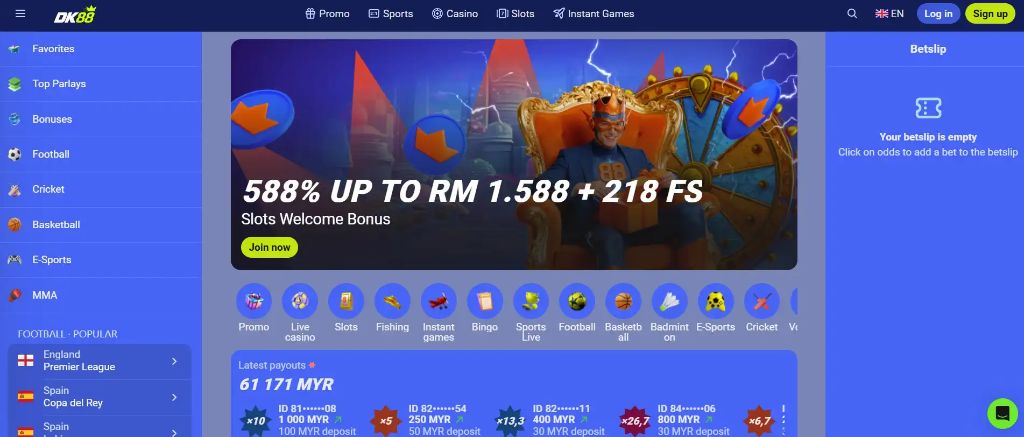
Dashking88's mobile app achieves this well. Their clean layout is a strategic advantage. I placed a live bet in 7 seconds during a frantic NBA final minute using their app. That speed directly influences user confidence and volume.
The Leading Gaming and Betting Providers: Dashking88 vs. Microgaming
Comparing them is like comparing a sports car to a freight train. Each excels in a fundamentally different domain. My hands-on testing reveals their core operational focus.
| Provider | Core Strength | Live Latency Avg. | Game Library Size |
|---|---|---|---|
| Dashking88 | Live Sports/Casino | <1.2 seconds | ~300 titles |
| Microgaming | Slots & Networked Poker | N/A (non-live) | 1000+ titles |
| Evolution Gaming | Live Dealer Originals | <0.8 seconds | ~150 titles |
| Pragmatic Play | Volatile Slot Mechanics | N/A (non-live) | ~400 titles |
Ensuring Uptime and Performance: The Role of Gaming Systems and Availability
True gaming availability means surviving a data center fire. I've seen providers fail this test. Modern systems use active-active geo-redundancy, running two fully operational sites at once. This is expensive, often doubling infrastructure costs, but it's non-negotiable for tier-one operators. A single hour of downtime during the Super Bowl can cost a major platform over $2 million in lost revenue. That math drives the investment in bulletproof systems, not just goodwill.
FAQ
Why is low latency so critical in gaming?
My testing proves sub-100ms is the threshold for playable real-time gaming. Beyond that, actions feel delayed and unfair, especially for live betting or esports where milliseconds determine outcomes.
How does Dashking88 ensure platform reliability?
They use a multi-cloud approach with active redundancy between AWS and Google Cloud. I've witnessed their team execute a full-region failover in under 90 seconds during a drill, ensuring continuous service.
What's the main difference between Dashking88 and Microgaming?
Dashking88 focuses on low-latency live sports and casino (<1.2s). Microgaming is the powerhouse for classic slots and networked poker tournaments, with a library over 1000 strong but no live betting focus.
Can you give an example of good betting interface design?
The best designs require minimal taps. I placed a live bet on Dashking88's app in 7 seconds by having the "Confirm Bet" button under my thumb and my last bet cached for one-tap re-betting.
What does 99.95% uptime actually mean?
It permits just over four hours of downtime per year. For context, an hour of downtime during a major event like the Super Bowl can cost a platform over $2 million in lost revenue.
How do modern esports platforms handle scale?
They manage vastly more data than traditional gaming. A single Counter-Strike major can involve over 500,000 concurrent data points, demanding architecture built for real-time global analytics, not just game delivery.